Fire curtains require maintenance to confirm that the complete system remains ready to perform its intended function throughout the life of the building. Therefore, maintenance involves more than looking at the curtain fabric. Teams also need to consider the deployment path, guides, bottom bar, headbox, operating mechanism, controls, power arrangements and interfaces with the building fire-alarm system.
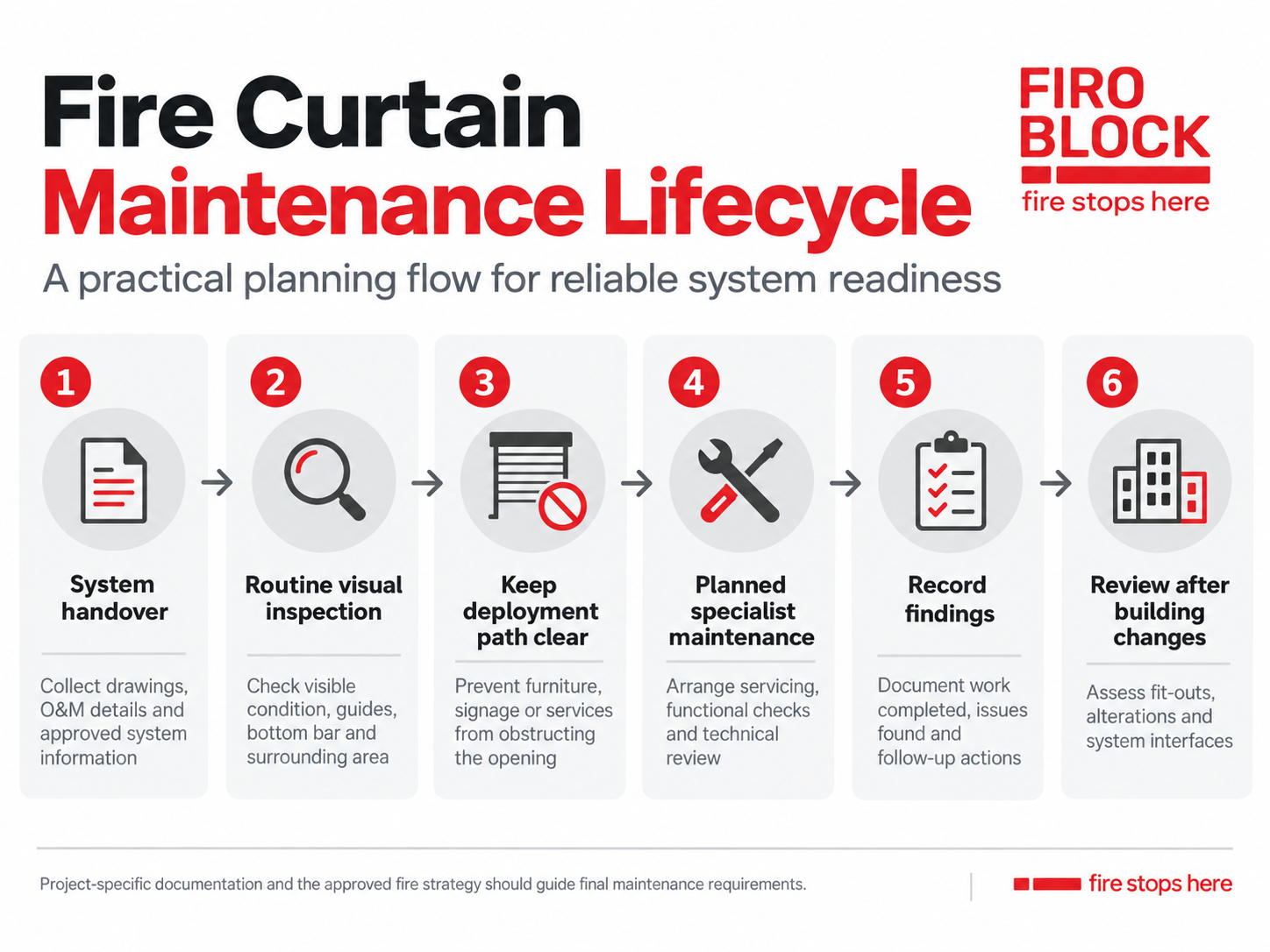
A good lifecycle plan starts with the approved system information and continues through routine inspection, planned servicing, functional checks and careful management of later building changes. However, the exact inspection and servicing activities must follow the manufacturer’s instructions, project documentation and applicable fire-safety requirements.
For building owners and project teams, the objective is straightforward: preserve the condition and operation of the system that forms part of the building’s fire strategy.
Why Fire Curtain Maintenance Needs Lifecycle Planning
Automatic fire curtains differ from static construction elements because they need to move when the fire strategy requires them to operate.
During normal building use, the curtain normally remains retracted. When the approved fire-safety sequence activates it, the curtain descends across a defined opening. Therefore, a system may spend long periods out of sight while still needing to remain ready for operation.
This concealed condition creates an important management issue. A system can appear unaffected during everyday building use, yet changes around the opening may interfere with deployment.
For example, an interior fit-out may introduce a sign, lighting element, ceiling feature or furniture item below the curtain. Likewise, later electrical work may affect associated controls or connections. Consequently, lifecycle planning needs to consider both the curtain and the environment around it.
Our automatic Fire Curtain system incorporates motorised retraction, automatic deployment and integration with building fire-alarm systems.
Therefore, inspecting only the visible fabric cannot confirm the condition of every part that contributes to system operation.
What Should a Fire Curtain Inspection Consider?
A fire curtain inspection should follow the system documentation and maintenance procedure applicable to that installation. However, teams can organise the process around several broad areas.
These include:
- the visible condition of the curtain and associated components;
- the clear deployment path;
- the guides and bottom bar;
- the headbox and accessible surrounding construction;
- the operating mechanism;
- relevant controls and interfaces;
- power or backup arrangements where applicable;
- evidence of alterations, damage or obstruction.
The inspection should remain proportionate to the role of the person carrying it out.
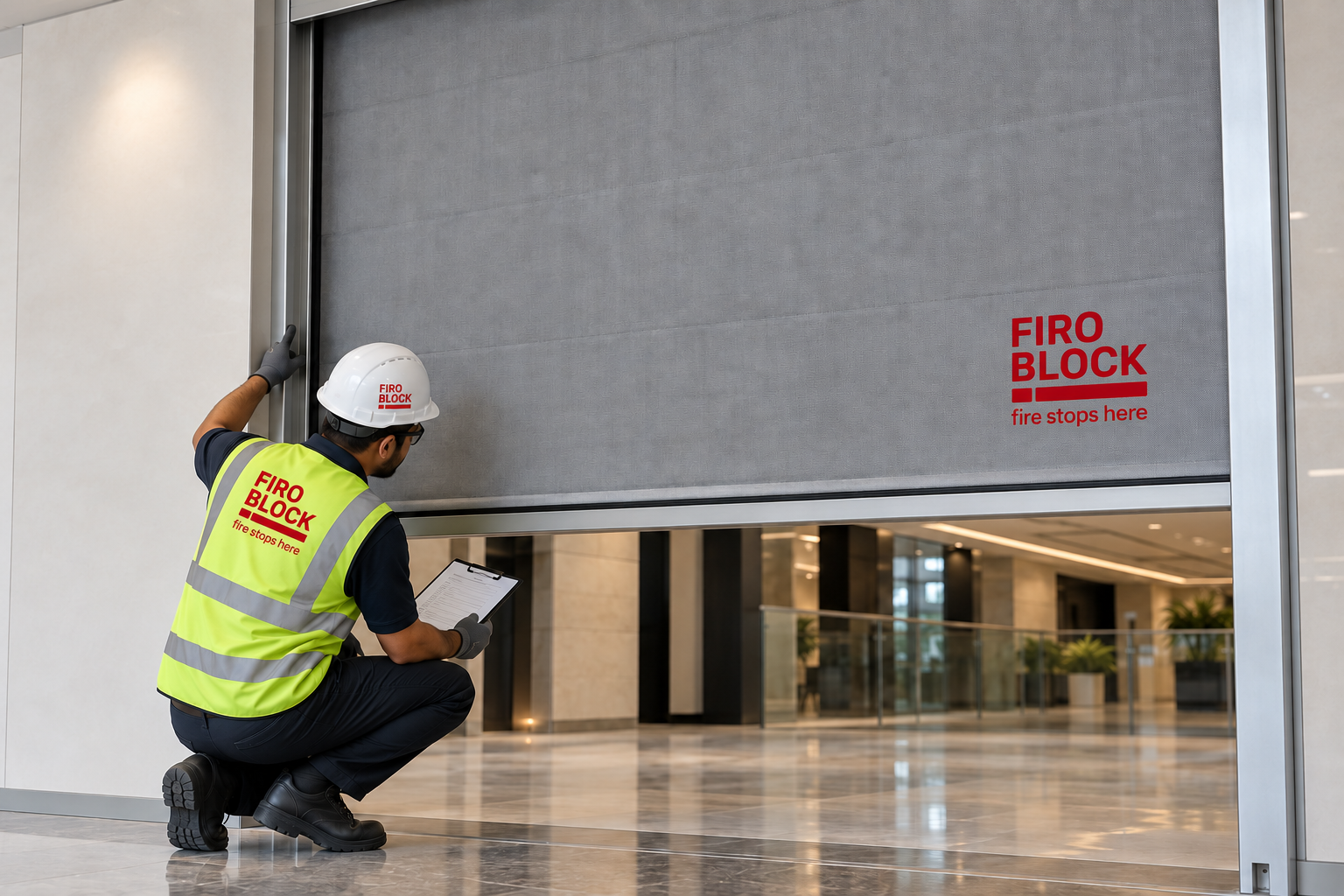
A routine visual check, for example, is different from specialist servicing. Facility staff may identify an obstruction or obvious physical damage. However, trained service personnel should handle technical adjustments, calibration and work on the operating mechanism.
That distinction helps prevent inappropriate intervention in a life-safety system.
Inspect the Visible Condition
A routine visual inspection can identify obvious changes or damage.
Depending on what is safely accessible, the inspector may look for visible damage to the fabric, seams, bottom bar, housing, guides and surrounding construction.
The inspection should not require dismantling equipment or carrying out adjustments. Those activities belong within the appropriate specialist maintenance process.
The surrounding area deserves equal attention. Building alterations can introduce new obstructions even when no curtain component has changed.
Therefore, inspection teams should look beyond the curtain itself.
Keep the Deployment Zone Clear
The curtain needs a clear path to reach its intended position.
For that reason, teams should prevent furniture, temporary displays, partitions, signage or building services from interfering with the deployment zone.
This point becomes especially important in commercial buildings because layouts can change frequently. Retail displays move. Offices undergo fit-outs. Ceiling services change. Facility teams may also introduce temporary equipment without recognising the protected opening.
Consequently, building management should treat the curtain deployment zone as a controlled part of the fire-safety arrangement rather than as unused architectural space.
Fire Curtain Maintenance Should Address System Operation
Visual condition forms only one part of maintenance.
Because an automatic curtain needs to deploy, the maintenance process also needs to verify operation according to the defined servicing procedure.
A functional check can help identify problems that a visual inspection may not reveal. For example, the curtain may encounter resistance during movement, fail to reach the intended position or show an operating issue that requires specialist attention.
However, teams should not improvise test procedures.
The approved operating sequence, manufacturer guidance and project fire strategy should define how the system needs to respond. In addition, technicians should understand any interfaces with other fire-safety systems before carrying out operational work.
A curtain that moves does not automatically prove that every aspect of the installation remains correct.
Therefore, maintenance needs to consider the complete intended sequence rather than simply confirming movement.
Coordinate the Fire Alarm and Electrical Interfaces
Automatic fire curtains may interact with fire-alarm controls and other building systems.
Our Fire Curtain system integrates with building fire-alarm systems for automatic activation. It also uses a gravity fail-safe arrangement with motorised retraction.
Therefore, lifecycle planning needs appropriate coordination between the fire curtain service team and those responsible for the relevant electrical and fire-alarm systems.
This becomes particularly important when contractors modify alarm programming, replace control equipment or alter electrical infrastructure.
A change elsewhere in the building can affect an interface even when nobody physically touches the curtain.
For that reason, building teams should communicate relevant system changes to the parties responsible for the fire curtain.
However, this article does not prescribe an alarm cause-and-effect sequence. The project fire strategy and approved technical documentation should define that requirement.
Power Arrangements Need Ongoing Attention
Power-related components also form part of lifecycle management where the system configuration relies on them.
Teams need to understand what happens when normal electrical power becomes unavailable. They should also know which functions depend on the normal supply, backup arrangement or mechanical release strategy.
However, different curtain systems may use different arrangements. Therefore, building teams should not assume that all automatic curtains behave in the same way.
Our post-warranty inspection and maintenance process considers battery performance as one of the relevant system checks.
Accordingly, relevant power components need attention within the defined FIROBLOCK servicing procedure.
Building Changes Can Affect a Previously Coordinated Fire Curtain
Lifecycle planning needs to continue after handover because buildings do not remain unchanged.
A tenant fit-out may alter ceilings. A refurbishment may change partitions. Contractors may introduce new signage, cable routes, lighting or mechanical services.
Any of these changes may affect the curtain opening, deployment zone, controls or access for future maintenance.
Therefore, teams responsible for alterations should identify existing fire-protection systems before approving work around them.
This requirement is particularly important because automatic fire curtains often remain concealed when retracted. As a result, someone planning an alteration may not recognise the protected line immediately.
Drawings, O&M information and clear coordination help reduce that risk.
After substantial work near the curtain, the responsible project or facility team should determine whether specialist review is necessary before treating the installation as unaffected.
Maintenance Records Support Lifecycle Control
Maintenance records help building teams understand what work took place and when.
At a basic level, documentation can identify the system, inspection date, work completed and any issue that requires follow-up. Therefore, records can support continuity when facility personnel or service contractors change.
However, record keeping should not become a substitute for physical maintenance.
The important point is traceability between the installed system, the work carried out and any unresolved action.
Our optional post-warranty maintenance service includes a maintenance report and job completion certificate after the service visit.
Who Should Take Responsibility for Fire Curtain Maintenance?
Responsibility needs to remain clear throughout the building lifecycle.
At handover, the building owner or facility team should receive the information necessary to understand the installed system and its maintenance requirements. Later, building management needs a process for arranging inspections, responding to defects and controlling alterations around the installation.
Specialist technical work should go to competent personnel familiar with the relevant system.
Meanwhile, architects, consultants and contractors still have a role during design and construction. They can help ensure that the system remains accessible and that other building elements do not prevent future inspection or servicing.
Therefore, lifecycle planning begins before the maintenance team arrives.
A well-coordinated installation makes future inspection easier. A poorly coordinated ceiling or inaccessible control location can complicate servicing for years.
When Should a Fire Curtain Receive Specialist Attention?
Teams should escalate issues when an inspection identifies something outside normal visual observation or routine building management.
Examples may include:
- visible damage to the curtain or associated components;
- abnormal movement during an authorised operational check;
- an obstruction that cannot simply be removed;
- evidence of alteration around the protected opening;
- suspected problems with controls or system interfaces;
- power or battery concerns where those elements form part of the system;
- uncertainty about the intended deployment sequence.
The appropriate response depends on the issue and the system documentation.
Therefore, facility teams should avoid making unapproved repairs or adjustments to mechanical, electrical or control elements.
Instead, they should arrange specialist review where the issue could affect operation.
This approach also prevents small maintenance concerns from becoming undocumented changes to the installed configuration.
How We Approach Fire Curtain Maintenance
At FIROBLOCK, we treat maintenance as part of the continuing management of the installed Fire Curtain system.
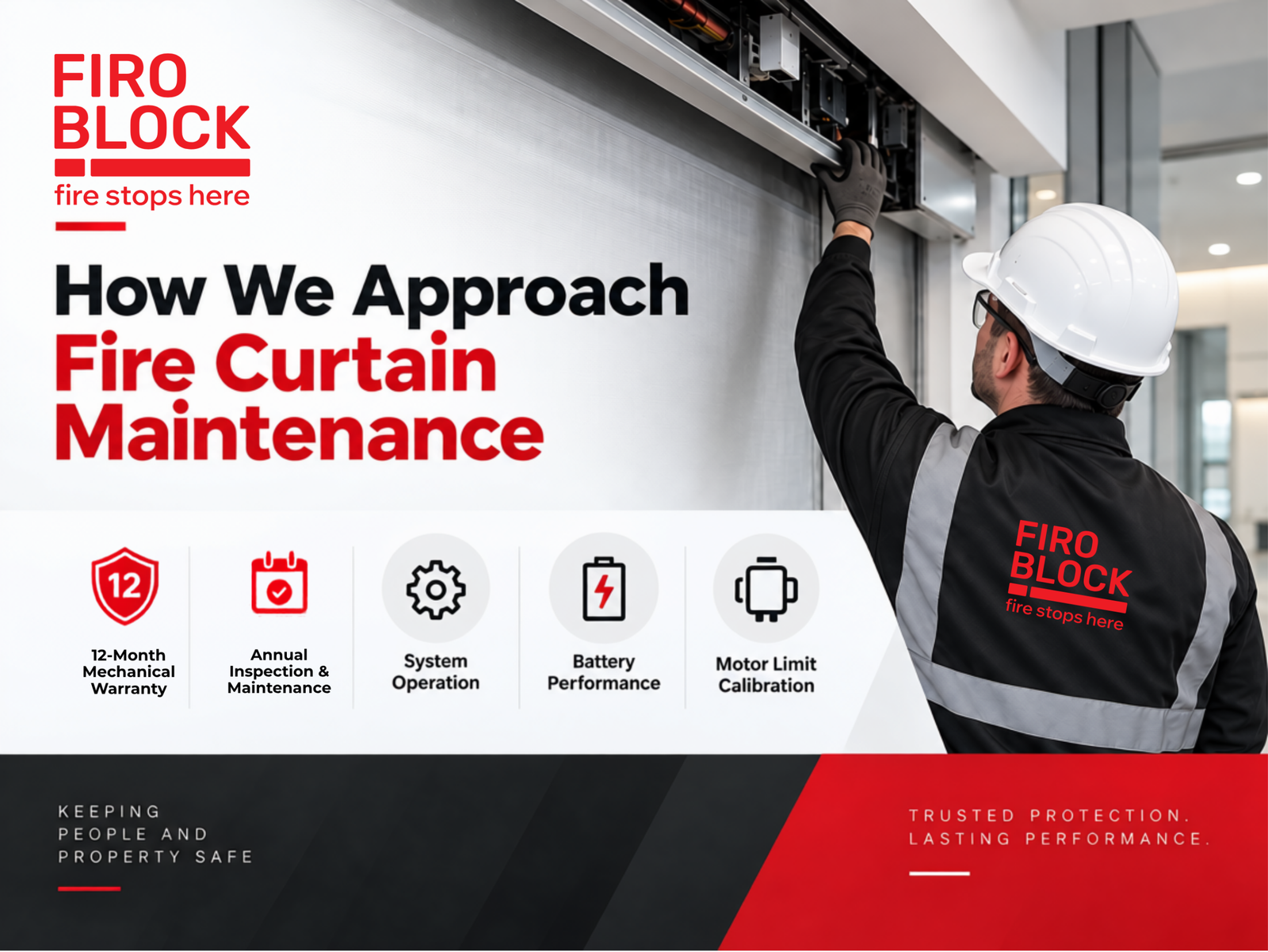
Our Fire Curtains carry a
12-month warranty covering the mechanical system from the date of installation. Following that warranty period, we specify
annual inspection and maintenance to check system operation, battery performance and motor limit calibration.
We also offer post-warranty service and maintenance as an optional service package. Following a service visit, we provide a maintenance report and job completion certificate.
Project and facility teams should still refer to the specific documentation supplied for their installed system. In addition, the project fire strategy and any applicable statutory or consultant requirements may introduce further obligations.
Our Fire Curtain system is separate from our
curtain wall firestop range. Therefore, ASTM E2307, IS 18190 and the 120-minute curtain wall perimeter barrier result do not define the maintenance or performance of our automatic Fire Curtain.
Our Fire Curtain has been tested to BS EN 1634-1, with system configurations providing fire-resistance performance of up to 240 minutes. The applicable system configuration and supporting technical documentation must govern any project-specific performance statement.
Building a Practical Fire Curtain Lifecycle Plan
A practical lifecycle plan does not need unnecessary complexity. However, it does need clear ownership.
Start with the installed system documentation and identify who manages the curtain after handover. Next, ensure that the responsible team understands the protected opening and knows that alterations around it require coordination.
Then, incorporate the appropriate inspection and maintenance activities into the building’s fire-safety management process.
Where our post-warranty annual maintenance interval applies, plan that service in advance rather than waiting for a problem to appear.
In addition, keep the deployment area free from later obstruction and retain the relevant service documentation.
Finally, treat unusual movement, physical damage or control concerns as issues requiring review rather than informal adjustment.
This approach connects design intent, maintenance activity and day-to-day facility management without confusing them.
Fire Curtain Maintenance Is Part of Maintaining the Fire Strategy
Automatic fire curtains may remain out of sight during most of a building’s normal operation. However, their concealed position does not reduce the need for lifecycle management.
A sound maintenance approach considers the visible condition, deployment path, operating system, relevant interfaces and changes to the surrounding building.
Just as importantly, it gives responsibility to the right people.
For our Fire Curtains, we call for annual inspection and maintenance following the 12-month mechanical-system warranty period. Project-specific documentation and the approved fire strategy should remain the basis for any additional requirements.
For a FIROBLOCK installation or an existing system that requires technical review,
contact our technical team with the available system and project information.
Frequently Asked Questions
- How often should a FIROBLOCK Fire Curtain receive maintenance?
We specify annual inspection and maintenance after the 12-month mechanical-system warranty period. The building team should also check the project documentation, fire strategy and any applicable regulatory or consultant requirements.
- Is visual inspection enough for fire curtain maintenance?
No. Visual inspection can reveal damage, obstruction or changes around the opening, but an automatic Fire Curtain also contains operating and control elements. Therefore, the defined servicing process needs to address the system functions identified in the maintenance procedure.
- Can facility staff inspect a fire curtain?
Facility staff can support routine visual monitoring where their responsibilities and training allow it. However, they should not dismantle, recalibrate or modify specialist components unless they have the competence and authority to do so.
- What building changes can affect a fire curtain?
Changes to ceilings, partitions, signage, furniture, electrical services or other construction near the protected opening can potentially affect deployment, access or system interfaces. Therefore, refurbishment teams should identify the curtain before approving nearby alterations.
- Does fire curtain maintenance include the fire-alarm connection?
The relevant interfaces need consideration because our Fire Curtains integrate with building fire-alarm systems. However, the appropriate inspection procedure depends on the approved operating sequence and project documentation.
- Should a damaged fire curtain continue to operate until the next service?
A facility team should not assume that visible damage has no effect on the system. Instead, record the issue and arrange suitable technical assessment in accordance with the system documentation and building fire-safety process.
- Are FIROBLOCK Fire Curtains the same as curtain wall firestop systems?
No. An automatic Fire Curtain protects a designated building opening by deploying when required. Our curtain wall firestop system addresses the floor-to-façade perimeter and related façade conditions. The systems, standards and performance claims must remain separate.