
Fire curtain procurement should confirm the proposed system, supporting evidence and full delivery scope before you issue a purchase order. Compare fire curtain suppliers against the same project brief. Then resolve exclusions, interface duties and handover requirements in writing. At FIROBLOCK, we recommend this approach because a headline price cannot show every project dependency.
A useful comparison starts with a defined opening and required function. It also needs current drawings and the project’s fire-strategy requirements. Without these, two offers may cover different systems or different amounts of work.

First, give each supplier the same drawing set and opening schedule. Include project location, required performance, surrounding construction and the expected programme. Also identify any design information that remains provisional.
If the design team has not settled a requirement, raise it before comparing prices. Otherwise, a supplier may price an assumption that the consultant later rejects. Record the answer and share it with every bidder. Keep all supplier clarifications with the final offer for a traceable comparison.
Request the documents that support the actual offer. Then ask the reviewing consultant to compare the proposed configuration with that evidence. A brochure headline alone cannot resolve every question about project suitability.
Keep descriptions precise. A test report records testing; a certificate has its own stated scope. Therefore, do not treat those documents as interchangeable. Ask the supplier to explain any claim that goes beyond the evidence provided.
Where the brief includes smoke performance, request separate supporting evidence for that requirement. Do not assume it follows from a fire-resistance claim.
Build the comparison around deliverables and responsibilities. Then place the price beside that scope. This gives the buying team a clearer view of what each offer includes.
We recommend checking these items before closing the comparison:
For each item, mark the responsible party. If an offer excludes cabling, for instance, confirm who provides it and when. A clear exclusion is manageable; an unassigned task can delay the project.
Ask what information the supplier needs before manufacture starts. This may include confirmed dimensions, drawing approval or other project inputs. However, the actual release requirements should come from the agreed offer.
Clarify how the delivery period starts. For example, does it follow the order, the approved drawings or another agreed milestone? Put that trigger into the purchase order so the programme uses the same assumption.
Confirm the expected handover documents before award. Then identify who prepares them and when the client will receive them. This makes documentation part of the purchase scope from the start.
Review warranty and service terms as separate commercial points. Ask for the coverage, start date, exclusions and reporting route in writing. Also clarify whether future visits, parts or call-outs sit outside the order.
Do not assume a maintenance package comes with the supply price. Instead, compare the written terms and check the operational budget. The facility team can help identify the information it needs before occupation.
Early procurement often starts before the design is complete. A budget estimate can support cost planning at that stage. However, identify its assumptions clearly so the buying team knows what still needs confirmation.
For example, preliminary opening dimensions may support an initial discussion without establishing the final manufactured arrangement. A later design change may affect the proposed system or scope. Therefore, retain the basis of the estimate alongside the figure.
Before award, ask the supplier to confirm the current offer against the latest enquiry information. Check whether previous assumptions still apply. Then identify any conditions that must close before the order becomes ready for release.
We recommend marking each offer by its purpose and revision. This helps reviewers distinguish a planning allowance from the terms they intend to accept. It also avoids comparing an early estimate with a later offer that includes more complete project information.
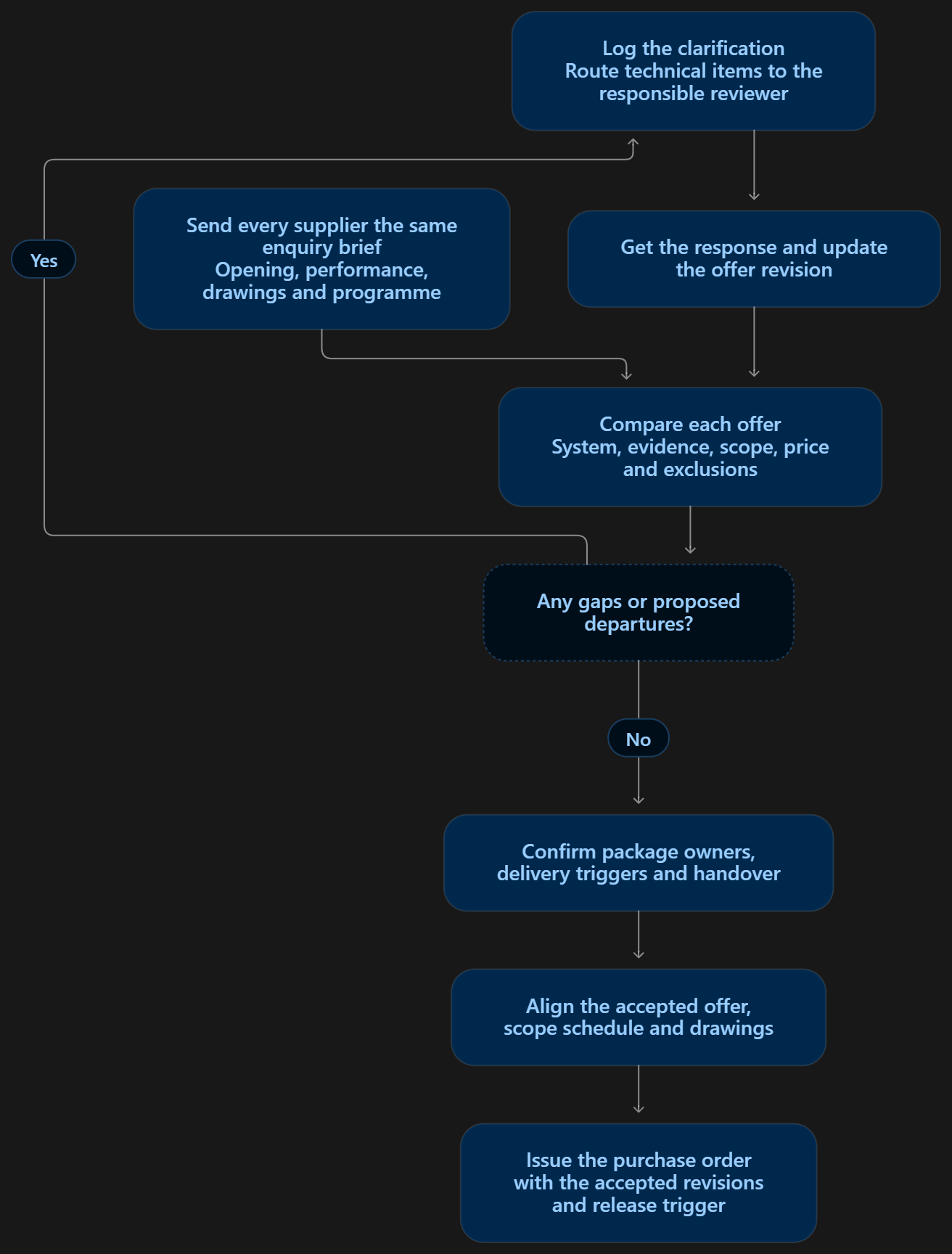
A structured comparison gives each supplier the same questions. Start with the relevant requirements in the enquiry brief. Then record the response, supporting document and any departure beside each item.
Use clear statuses such as “confirmed”, “clarification needed” or “excluded”. A blank field can conceal an assumption. Therefore, ask the supplier to complete missing answers before the team treats the comparison as final.
For instance, one offer may include commissioning attendance while another expects a separate appointment. Both responses can be clear, but they do not represent the same scope. The comparison should show that difference beside the price.
Keep technical acceptance with the responsible consultant or project authority. Procurement staff can collect and organise the responses without deciding every engineering question. Once the reviewers close the clarifications, retain the final comparison with the award recommendation. This makes the buying decision easier to explain later.
A supplier may propose a different arrangement from the enquiry. Ask for a clear description of the departure and its implications. Then route the proposal to the people responsible for the affected design and contract requirements.
For example, a different guide arrangement may affect the surrounding finish or available opening. A revised control proposal may affect another package. Therefore, assess the wider interface rather than comparing the curtain item alone.
Do not treat a lower price as evidence that the alternative meets the brief. Likewise, a familiar product name does not resolve every project question. Review the applicable evidence and the actual proposed configuration.
If the team accepts the alternative, update the agreed scope and drawing references. Also record any resulting cost or programme change. This prevents the purchase order from referring to one arrangement while the accepted technical submission describes another. Keep the final approval traceable to the offered revision.
Fire curtain supply sits beside several other work packages. Therefore, define each boundary in terms of a task and responsible party. Avoid a general note that leaves every interface “by others” without further detail.
For example, an exclusion for electrical works should lead to a clear question. Which party provides the relevant supplies, routes and connections under the approved design? The same approach applies to support work, access provisions and finish reinstatement.
Ask each responsible contractor to confirm its part before award. Otherwise, the procurement team may close one order while creating an unpriced task elsewhere. A complete comparison needs visibility of those related costs and duties.
We recommend carrying the final responsibility schedule into the purchase documents. Then link each interface to the relevant drawings and programme dependencies. This gives the site team an agreed starting point when the packages meet at the opening.
A delivery period needs a clear starting point and a defined scope. Ask the supplier to explain the inputs behind the quoted period. Then compare those inputs with the project’s ability to provide them.
For instance, an offer may depend on approved drawings and confirmed site information. If those inputs arrive late, the original programme assumption may no longer hold. Therefore, identify the responsible team and target date for each prerequisite.
Also distinguish delivery to site from readiness for installation. Access, preceding work and agreed site conditions may affect the installation programme. The purchase order should not leave the team guessing which milestone the supplier has priced.
Where the project needs phased delivery, request a clear proposal for the relevant areas or quantities. Confirm how the phases relate to approvals and storage arrangements. However, leave actual commitments to the written offer rather than assuming a standard lead time from general market information.
Read the commercial offer with the scope comparison beside it. This helps the team identify conditions that affect the apparent total price. Then clarify taxes, transport, installation-related charges and other stated items where relevant to the offer.
For example, a price may exclude an additional site visit after incomplete preceding work. Another offer may include a defined attendance allowance. Ask for the conditions in writing so the comparison reflects the project’s likely needs.
Review payment milestones against the agreed deliverables. The buying team should understand what each stage covers and how the contract records completion. However, payment terms need the purchaser’s commercial review; this guide does not set a standard contract position.
Also ask how long the offer remains valid. If the design review extends beyond that period, seek confirmation before award. Keeping technical and commercial revisions aligned reduces the risk of accepting an outdated figure or scope.
The technical submission should make its supporting documents easy to identify. Ask for clear references, relevant revisions and the scope of the proposed arrangement. Then let the responsible reviewer assess whether the evidence addresses the project requirement.
For example, the product described in the quotation should match the system named in the technical submission. If the names or configurations differ, ask the supplier to reconcile them. Do not rely on a verbal explanation when the order will use written references.
Also distinguish general product literature from the documents that support a specific performance claim. Both can be useful, but they serve different purposes. Where a certificate applies, review its stated scope and any relevant conditions.
We recommend retaining a short document index with the accepted submission. It should connect the proposed system to the evidence under review. This helps the project team retrieve the right information during installation planning and handover.
The facility team will use the system information after the construction team leaves. Therefore, ask for its document and support needs before finalising the purchase scope. Early input can reveal a missing deliverable while the order still allows clarification.
For instance, the team may need asset references that match the building’s existing record system. It may also need a clear route for reporting faults or requesting specialist support. Record those needs and confirm how the contract addresses them.
Avoid promising a response time or maintenance outcome that the supplier has not agreed. Instead, request the actual service terms and review them with the owner. Identify any separate agreement that the operating budget must cover.
Where several parties share responsibility, explain the reporting path in the handover requirements. This reduces uncertainty about who receives a concern first. It also makes support arrangements part of the procurement decision rather than a question left until occupation.
Before issuing the order, check that the quotation, scope schedule and accepted drawings use compatible revisions. Then identify the documents that form the agreed basis of supply. A clear index helps both parties find the final terms.
For example, an email clarification may remove an exclusion from an earlier quotation. The final order should capture that agreement clearly. Otherwise, the site team may read the original exclusion and reach a different conclusion.
We recommend a final review of open questions before award. Separate unresolved technical decisions from commercial conditions and programme assumptions. Each item needs a clear owner and an agreed route to closure.
If the project proceeds with a stated condition still open, make that condition explicit. Do not let the award notice imply that every detail has already closed. Clear records help the team manage the next step and assess later changes against the actual agreement.
During tender review, suppliers may answer questions at different times. Maintain one clarification log so the team can see the current position. Give each question a reference and connect it to the relevant enquiry requirement.
For example, one bidder may clarify an installation exclusion while another revises its proposed scope. Record both responses in the same comparison structure. Then check whether the change affects the amount of work or the programme assumption behind the price.
Where a clarification changes the project brief, issue the revised requirement consistently to the relevant bidders. This keeps the comparison based on shared information. However, handle supplier-specific proposals through the project’s agreed tender process.
We recommend closing the log with the final offer revision. An answer in an earlier email may no longer describe the latest quotation. Ask the supplier to reconcile any conflicting references before award.
Finally, retain the accepted answers with the order documents. The project team needs to know which clarifications became part of the agreement. Clear records make later queries easier to resolve because both parties can refer to the same scope, rather than reconstructing the discussion from separate inboxes.
Our automatic fire curtains provide a deployable barrier for suitable building openings. We support technical discussions around the proposed configuration and project requirements.
Good procurement leaves fewer unanswered questions at award. Close the evidence, scope and programme gaps before the purchase order, then keep the agreed revisions with the contract records.
Ready to review a project requirement? Contact our FIROBLOCK team with your enquiry package to discuss the proposed solution and quotation scope.